
Solar Lighting Blog & News
Latest news, technical guides, and expert perspectives on smart solar street lights, off-grid infrastructure, and clean energy technology.
CE Certified Low-Temperature Product Portfolio
Explore our rigorous OEM/ODM solar street lighting systems engineered with smart thermal protection, high-efficiency MPPT controllers, and long-life low-temp lithium battery chemistries.
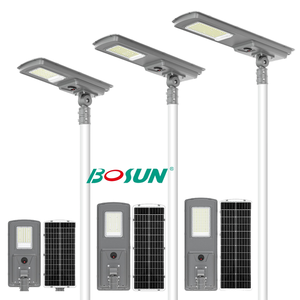
Dusk to Dawn All in One Solar Street Light Outdoor Waterproof
- Integrated Low-Temp LiFePO4
- IP67 Heavy-Duty Waterproof
- Smart PIR Motion Sensor
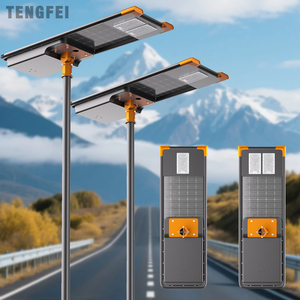
Hot Selling Low-energy Split Solar Street Light Outdoor Led Lamp
- Split Architecture for Harsh Cold
- High-Efficacy LED Chips (180 lm/W)
- External Underground Battery Vault
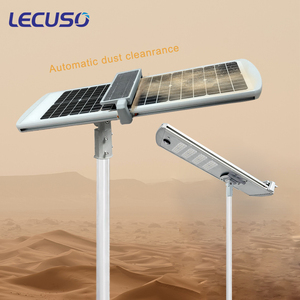
30W-150W Automatic Auto Clean Self Cleaning Solar Street Light
- Robotic Snow & Dust Sweeper
- Dual PV Panel Configuration
- CE & RoHS Certified Compliance
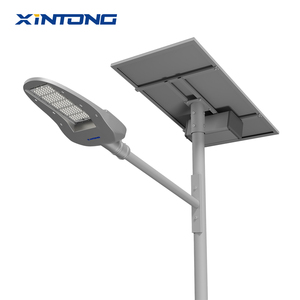
Road Light 60W-150W Split Solar Street Lamp Infrastructure
- Heavy Highway Optics Control
- Thermal-BMS Self-Heating System
- Wind Load Resistant to 160km/h
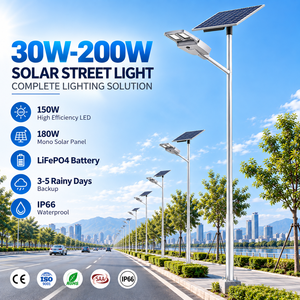
All In Two LED Solar Powered Street Light IP66 with Battery Backup
- Flex-Angle Adjustable PV Panel
- Extended 5-Day Autonomy Storage
- Die-Cast Aluminum Heat Sink
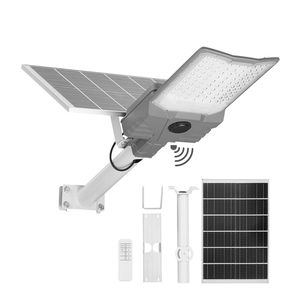
High-Powered Industrial Solar Street & Floodlight System
- 240° Ultra-Wide Beam Angle
- Extreme Lumen Density Module
- Low-Temperature LTO Option
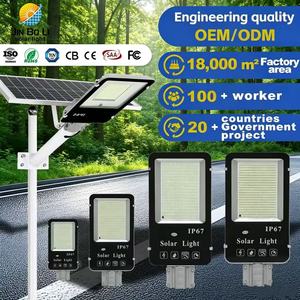
Remote Control IP67 Solar LED Light 50W-300W Commercial Split
- Wireless RF & IoT Dimming
- Certified RoHS / CE Compliance
- Sub-Zero Charge Efficiency

SLOER Series Commercial Grade All-in-One Solar Street Light
- Competitive Factory Direct Pricing
- Sleek Modular Aluminum Alloy
- Rapid Deployment Mounting
Engineering White Paper: Overcoming Cold-Climate Failures in Solar Public Lighting
Standard off-grid solar street lights installed across Northern Europe, North America, Central Asia, and high-altitude regions experience widespread system degradation during winter months. The primary causes of catastrophic failure stem from chemical latency in standard Lithium Iron Phosphate (LiFePO4) cells below 0°C, reduced solar irradiance, and heavy snow covering flat-mounted Photovoltaic (PV) modules.
1. Lithium Chemistry Dynamics in Sub-Zero Climates
Conventional LiFePO4 batteries suffer from severe lithium-plating when charged at temperatures below freezing (0°C / 32°F). Charging under freezing conditions creates metallic lithium dendrites on the anode, causing internal short circuits, permanent capacity loss, and sudden battery failure. As certified low-temperature solar street light manufacturers, our R&D team implements two proprietary solutions:
A. Smart BMS Self-Heating Thermal Jackets: Our intelligent Battery Management System (BMS) continuously monitors internal cell temperatures. When ambient solar energy is detected at freezing temperatures, the BMS redirects initial PV current into ultra-thin polyimide heating foils wrapped around the battery pack, warming the core to +5°C before initiating the main charge cycle.
B. Lithium Titanate (LTO) & Low-Temp LiFePO4 Chemistry: For arctic deployments (-30°C to -40°C), we utilize specialized low-temperature chemistry formulations with modified electrolyte additives, allowing safe chemical intercalation down to -30°C without requiring auxiliary heating.
2. Snow-Management & Tilt Angle Dynamics
Dust and snow accumulation reduce solar conversion efficiency by up to 85%. Our solutions feature automated mechanical cleaning wipers and high-angle vertical or semi-vertical pole-mounted panel configurations (such as the EnGo Slim and EnGo Leaf designs). Vertical panel integration prevents snow buildup while capturing low-angle winter sunlight efficiently.
Technical Benchmarks: Conventional vs. CE Certified Low-Temp Systems
A direct technical comparison highlighting why standard commercial solar street lights fail in sub-zero climates compared to our engineered low-temperature systems:
| Performance Specification | Standard Commercial Solar Light | CE Certified Low-Temp Solar Light | Procurement Advantage |
|---|---|---|---|
| Operating Temp Range | -10°C to +45°C | -40°C to +60°C | Prevents winter shutdown & freeze failure |
| Low-Temp Charge Protection | None (Standard BMS cuts off charge) | Smart BMS Active Heating / LTO Cell | 365-day uninterrupted battery charging |
| Battery Cycle Lifespan | 1,500 – 2,000 Cycles @ 25°C | 4,000 – 6,000+ Cycles (Extended) | Reduces 10-year Total Cost of Ownership (TCO) |
| Luminous Efficacy | 120 - 140 lm/W | 180 - 210 lm/W Ultra-High Output | Higher illumination with lower battery draw |
| Solar Controller Type | PWM or Low-Grade MPPT | Smart Temperature-Compensated MPPT | 30% higher energy harvesting in low light |
| Ingress / Impact Protection | IP65 / IK08 | IP67 Waterproof / IK10 Vandal-Proof | Resists heavy snow, ice storms, and vandalism |
| European Certification | Basic CE Mark (Self-Declared) | TÜV / CE (LVD + EMC + RoHS) Verified | Seamless municipal tender compliance |
Future Procurement Trends: The Next Generation of Solar Lighting Architecture
As governments, industrial parks, and smart cities accelerate decarbonization targets, global procurement requirements for solar street lighting are evolving rapidly beyond basic lighting functionality.
Trend 1: Smart City Multi-Sensor Convergence
Modern public lighting poles are transforming into smart energy nodes. Incorporating modular systems like EnGo Light, EnGo Monitor, and EnGo Connect, procurement officers now mandate that low-temperature solar poles house 4G/5G micro-hotspots, environmental monitoring sensors (CO2, PM2.5), traffic density cameras, and emergency call buttons—all powered by off-grid solar reserves.
Trend 2: Dynamic AI Energy Management
Static dimming schedules are being replaced by adaptive AI energy algorithms. Modern MPPT controllers utilize predictive weather analytics, adjusting LED output dynamically based on real-time solar harvest history and multi-day overcast forecasts to maintain 100% continuous lighting autonomy through severe winter blizzards.
Trend 3: Strict EU Green Public Procurement (GPP)
The European Union and North American municipalities require strict adherence to circular economy principles. Suppliers must deliver CE-certified products backed by RoHS hazardous substance compliance, modular repairability, easily recyclable aluminum alloys, and non-toxic battery chemistry standards.
Trend 4: Self-Cleaning & Maintenance-Free Systems
Labor costs for servicing remote solar poles on highways or sub-arctic installation sites often exceed initial capital expenditure. Robotic auto-cleaning solar street lights featuring scheduled sweeping cycles eliminate dust, ice, and bird droppings, guaranteeing peak energy harvesting without human intervention.
Frequently Asked Questions (FAQ) for Solar Sourcing
Key technical and procurement insights for municipal engineers, EPC contractors, and B2B exporters.
Our low-temperature solar street lights utilize specialized battery management systems (BMS) with integrated thermal heating jackets or low-temperature electrolyte chemistries (such as specialized LiFePO4 or Lithium Titanate / LTO). When ambient temperatures drop below freezing, the system's intelligent thermal circuit heats the battery enclosure using PV input before charging commences. This prevents lithium plating and ensures reliable operation down to -40°C.
To legally import and install solar street lights in the European Union, products must comply with the Low Voltage Directive (LVD 2014/35/EU), Electromagnetic Compatibility Directive (EMC 2014/30/EU), and Restriction of Hazardous Substances (RoHS Directive 2011/65/EU). Furthermore, street lighting luminaires should adhere to EN 60598-2-3 safety standards. Our complete product lineup holds verified CE and RoHS testing certification from accredited third-party laboratories.
All-in-One (Integrated): Combines the PV panel, battery, controller, and LED fixture in one single housing. Compact and easy to install, best suited for moderate freezing zones or setups with self-heating batteries.
All-in-Two: Separates the adjustable solar panel from the LED light and battery housing, allowing optimal tilt positioning toward the winter sun.
Split Solar Street Lights: Features a dedicated solar panel mounted at the pole top and an external battery buried underground or housed in an insulated pole chamber. Underground burial keeps the battery at a stable ground temperature (typically +5°C to +10°C), making it ideal for severe arctic winter conditions.
Our auto-cleaning solar street light models feature an integrated robotic sweeping brush powered by a micro-step motor. The brush runs automatically twice daily across the face of the solar panel, clearing away snow, frost, dust, and debris. This mechanical cleaning routine keeps solar light absorption at maximum efficiency without requiring costly manual maintenance.
Yes. Our smart solar lighting infrastructure (such as EnGo Slim, EnGo Illumo, and EnGo Leaf systems) can be customized with integrated 4G/5G Wi-Fi micro-transceivers, HD security cameras, air quality environmental monitors, and RS485/Zigbee wireless lighting control networks for remote central management (CMS).
We provide a comprehensive 3 to 5-year commercial warranty on complete systems, with an expected design lifespan of 25 years for solar panels, 100,000 hours for LED chips, and 8 to 10 years for low-temperature lithium battery systems.
Request Engineering Specifications & OEM Wholesale Catalog
Partner with a premier CE-certified low-temperature solar street light manufacturer. Get complete IES photometric files, technical specification sheets, and competitive direct factory pricing for your upcoming tender or procurement project.