
Solar Lighting Blog & News
Latest news, technical guides, and expert perspectives on smart solar street lights, off-grid infrastructure, and clean energy technology.
Expressway Solar Street Light Series Showcase
Explore our CE-certified off-grid solar street lights, precision-engineered for highway safety, intense wind load tolerance, and uninterrupted multi-night autonomy.
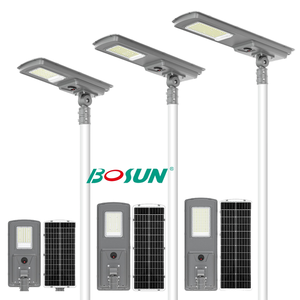
Dusk to Dawn All in One Solar Street Light Outdoor Waterproof
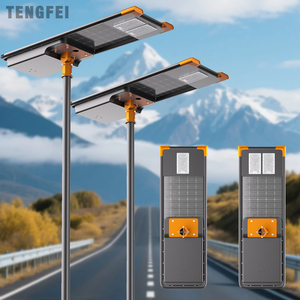
Hot Selling Low-energy Split Solar Street Light Outdoor Led Street Lighting Lamp
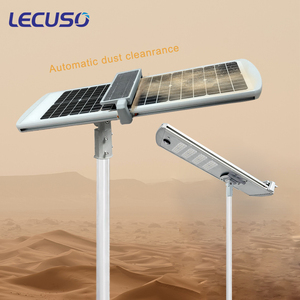
High Quality 30w 50w 60w 90w 100w 150w Automatic Auto Clean Self Cleaning Solar Street Light
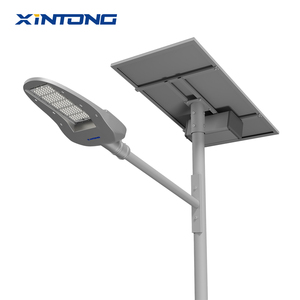
Road Light 60W 80W 100W 120W 150W Solar Street Lamp Split Solar Street Light
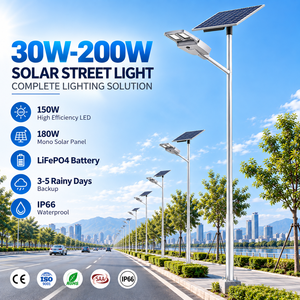
All In Two Lamp Led Solar Powered Street Light IP66 80W 100W 150W Lighting Solar Street Light With Battery Backup
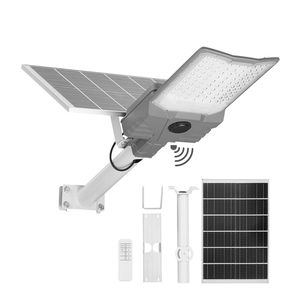
12000W High-Powered Solar Street Light 900,000LM Outdoor Dusk-Dawn Split-Type LED Floodlight 6500K CCT 240 Beam Angle
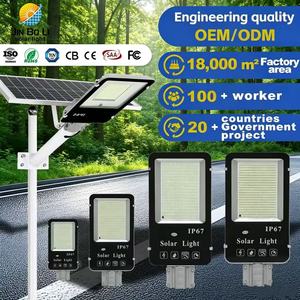
Remote Control IP67 Solar LED Light, 50W-300W, Split Type Outdoor Street Lamp, Waterproof, RoHS Certified

SLOER Competitive Price Good Quality 60W 120W Commercial Split All in One Solar Street Light Manufacture
Engineering Standards for CE Certified Expressway Solar Street Lights
Modern expressway illumination demands strictly monitored photometric distribution, high mechanical endurance, and guaranteed off-grid energy continuity. As an established original equipment manufacturer (OEM) and direct factory enterprise, our CE-certified expressway solar street lights comply with European Union directives including EN 60598-2-3 (Public Roadway Lighting), EN 55015 (Electromagnetic Compatibility), and EN 61547 (EMC Immunity Performance).
Unlike standard urban pathway fixtures, high-speed arterial corridors require specialized optical design. Expressway lighting must achieve uniform ground illuminance without inducing visual fatigue or glare for drivers travelling at speeds above 100 km/h. To satisfy EN 13201 Class M1 to M3 requirements, our optical systems utilize high-transmittance PMMA batwing lenses with asymmetric Type II-M and Type III-M light distributions. This optics design projects lumens efficiently along long, multi-lane roadways while maintaining a Threshold Increment (TI) below 10% and a Unified Glare Rating (UGR) under 19.
Key Engineering Metric: Our expressway solar street light systems deliver up to 210 lumens per watt (lm/W) at the LED chip module level, reducing battery capacity footprint requirements by 35% while extending continuous rainy-day operation up to 7-10 consecutive nights.
Photovoltaic Cell Integration & Thermal Management Matrix
The core reliability of an off-grid highway lighting fixture rests upon its solar energy conversion efficiency and battery lifespan stability under ambient temperature extremes (-40°C to +70°C). Our manufacturing facility deploys Monocrystalline N-Type TOPCon (Tunnel Oxide Passivated Contact) photovoltaic panels featuring surface conversion efficiencies exceeding 24.5%. Integrated bypass diodes prevent hot-spot degradation caused by partial shading from overhead signs, trees, or bird droppings.
| System Architecture Component | Technical Specification Standard | Expressway Reliability Impact |
|---|---|---|
| Photovoltaic Technology | N-Type TOPCon Monocrystalline (24.5%+ Efficiency) | Maximum power generation in low irradiance & diffused sunlight |
| Battery Storage Chemistry | LiFePO4 (Lithium Iron Phosphate) Grade A Cells | 6,000+ cycles at 80% DoD; thermal safety against thermal runaway |
| MPPT Charge Controller | 32-Bit Smart Tracking Algorithm (99.5% Tracking Eff.) | Dynamic voltage adaptation, preventing battery overcharging/overdischarge |
| Optical Lens Rating | Batwing Asymmetric Type II-M / III-M (PMMA UV-Stabilized) | Zero dark spots between pole spacings up to 50 meters apart |
| Housing & Structural Rating | Die-Cast ADC12 Aluminum + Anodized Marine Coating | IP67 Waterproof, IK10 Impact Resistance, Wind load resistance up to 60m/s |
Product Development & Technological Evolution Trends
The commercial and highway solar lighting sector is undergoing a rapid transition from basic dusk-to-dawn illumination to smart, connected multi-functional IoT nodes.
Automatic Self-Cleaning Robotic Systems
Desert and high-dust highway environments experience up to 40% PV power loss due to soiling. Future-proof solar lighting integrates automated dual-brush wipers programmed to clean panels daily, ensuring 99% solar efficiency without manual maintenance.
IoT Central Management (Zhaga Book 18 & NB-IoT)
Modern highway procurement mandates standardized Zhaga or ANSI C136.41 7-pin sockets. Integrators can plug in LoRaWAN or NB-IoT controllers for remote dimming, real-time fault diagnostics, and energy monitoring via cloud dashboards.
Adaptive AI Dynamic Dimming
Instead of static timers, AI-driven radar motion sensors detect vehicle speed and traffic density. Fixtures dynamically adjust output from 30% ambient standby to 100% full lumen output as traffic approaches, conserving battery energy reserves.
Future Procurement Trends for Global Infrastructure Buyers (2025–2030)
As governments worldwide accelerate net-zero carbon mandates and decarbonize transportation infrastructure, procurement protocols for highway street lighting are shifting dramatically from legacy grid-connected High-Pressure Sodium (HPS) fixtures to autonomous off-grid solar infrastructure. B2B procurement officers, municipal engineers, and EPC contractors must evaluate several critical factors during vendor selection:
1. Shift Toward "Solar Lighting as a Service" (LaaS) and Zero-CAPEX Financial Models
Municipalities and private road concessionaires are increasingly adopting subscription and lease-to-own procurement frameworks. Factory-backed warranty extensions (up to 10 years) and guaranteed performance agreements ensure zero upfront capital strain. Procurement specs now demand modular component replacement—enabling fast field maintenance of battery packs or LED engines in under 15 minutes per pole.
2. Stringent Environmental & Recyclability Standards (RoHS 2.0 & Circularity)
CE Certification alone is no longer the sole gatekeeper. B2B procurement mandates compliance with RoHS 2.0 (Restriction of Hazardous Substances) and WEEE directives. Factories must supply full material disclosure sheets ensuring heavy metals (such as Lead, Cadmium, or Hexavalent Chromium) are eliminated from heat sinks, solder joints, and battery management circuitry.
3. High-Wattage (120W-150W+) Split-Type Dominance for Multi-Lane Arterials
While compact "All-in-One" solar lights excel in residential streets and parking areas, high-speed multi-lane expressways require larger solar panel surface areas (up to 300W-400W PV power) and high-capacity battery banks. The procurement trend for expressways heavily favors All-in-Two and Split-Type solar street light configurations where the solar panel angle can be independently adjusted to optimize solar inclination angles across varying global latitudes.

Integrated Sleek Solar Poles
Aesthetic urban and expressway entryway pole designs.

High Lux Compact Luminaires
Maximum lumen density engineered for high-speed lanes.
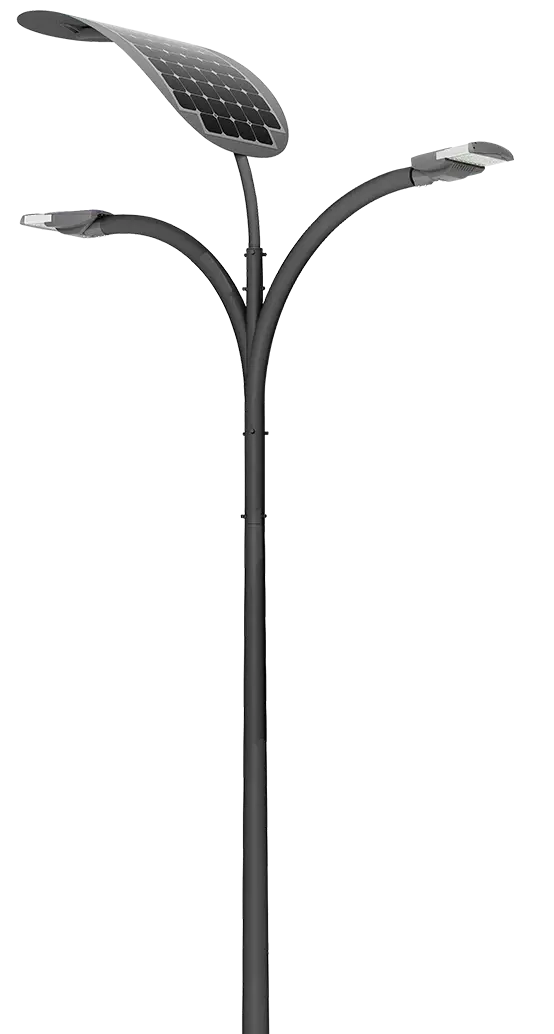
Variable Sunlight Optimization
High efficiency harvest for low-sunlight geographic zones.
Expressway Solar Street Light Procurement FAQ
Answers to common technical, commercial, and engineering questions posed by B2B procurement managers and municipal engineers.
How do CE Certified solar street lights meet EN 13201 requirements for expressways?
Our CE-certified expressway lights undergo rigorous goniophotometer testing to produce IES/LDT photometric files. By utilizing specialized asymmetric batwing lenses (Type II-M and Type III-M), the light distribution ensures uniform ground illuminance across multi-lane highways while keeping glare (TI values) below 10%, meeting strict EN 13201 M1-M3 lighting standards.
What is the difference between Split-Type and All-in-One solar street lights for highway application?
Split-type systems separate the solar panel, LED luminaire, and battery box, allowing high-capacity PV panels (up to 400W+) to be mounted at optimal inclination angles for high-wattage (100W-150W) highway requirements. All-in-One fixtures combine all components in a single housing, ideal for easy installation on urban streets, parking lots, and rest areas requiring up to 80W-100W output.
How does an automatic self-cleaning solar system benefit desert highway projects?
In dusty or arid environments, dirt accumulation on solar panels can reduce charging efficiency by 30% to 50% within weeks. Automated self-cleaning systems deploy a built-in robotic wiper brush that cleans the glass panel twice daily, ensuring consistent maximum power extraction without requiring costly manual highway maintenance crews.
What battery protection chemistry is utilized to survive extreme ambient temperatures?
We strictly utilize automotive-grade LiFePO4 (Lithium Iron Phosphate) battery cells equipped with intelligent Battery Management Systems (BMS). LiFePO4 offers superior thermal stability, preventing thermal runaway up to +70°C and incorporating low-temperature heating elements for charging down to -40°C, delivering over 6,000 deep discharge cycles.
Can your factory support OEM/ODM customization and custom engineering drawings?
Yes. As a direct OEM manufacturer and engineering solutions enterprise, we provide complete custom engineering support including DIALux lighting simulations, wind load calculations (up to 60m/s), custom pole arm adaptors, project-specific CCT tuning (2700K to 6500K), and IoT controller integration.
What documentation is provided for B2B municipal tendering process?
We supply full municipal bid compliance documentation packages, including CE Certificates of Conformity (LVD & EMC), RoHS test reports, IES LM-79 and LM-80 lumen depreciation reports, IP67 and IK10 test certificates, and ISO 9001/ISO 14001 factory production audit reports.
Direct Manufacturing Expertise & Global Infrastructure Footprint
With over 500+ successful project deployments in 40+ countries, our engineering teams design and manufacture smart, off-grid solar street lighting systems that power critical highway networks, municipal boulevards, and corporate facilities worldwide. Trusted by tier-1 telecommunications providers, global tech giants, and city governments.









Ready to Request Commercial B2B Specifications & Pricing?
Connect directly with our senior solar engineering specialists to receive comprehensive product specification sheets, IES photometric files, and factory-direct pricing for your expressway project.