Solar Lighting Blog & News
Latest news, technical guides, and expert perspectives on smart solar street lights, off-grid infrastructure, and clean energy technology.
How to Choose Smart Solar Street Lights in 2026?
Table of Contents
- What Are Smart Solar Street Lights and How Do They Work?
- Which Site Conditions Should You Assess Before Choosing One?
- How Do You Compare Solar Panels, Batteries, LEDs, and Controllers?
- What Smart Features and Safety Functions Should You Look For?
- How Can You Evaluate Installation, Maintenance, Cost, and Lifespan?
- FAQS
- Conclusion
- Related Posts
Choosing a Smart Solar Street Light in 2026 requires more than comparing panel size or advertised brightness. A reliable decision begins with the location. Measure night traffic, winter sunlight, rainfall, dust, and nearby tree coverage. A lamp that performs well in a sunny showroom may struggle beside tall buildings or during several cloudy nights.
This guide examines the practical features that influence long-term performance. These include photovoltaic efficiency, battery chemistry, lumen output, lighting duration, motion sensors, remote monitoring, and weather protection. Check the product’s IP rating and operating temperature range. Also review warranty terms, replacement access, and previous installations. Real project evidence is more valuable than impressive graphics.
There is no universal best model. That is worth remembering. A rural road may need dependable all-night lighting, while a pedestrian path may benefit from adaptive dimming. Lower purchase prices can hide battery replacement costs, weak controllers, or difficult maintenance. Even professional evaluations can miss local conditions when site data is incomplete. I have seen specifications look excellent until shading reduced daily charging. Careful testing remains essential.
The following sections explain how to compare Smart Solar Street Light systems with clearer technical and financial criteria. They also consider installation quality, monitoring performance, safety expectations, and lifecycle value. By combining manufacturer documentation with field observations, buyers can avoid rushed choices. The goal is not maximum brightness alone. It is consistent, efficient, and maintainable lighting for real streets in 2026.
What Are Smart Solar Street Lights and How Do They Work?
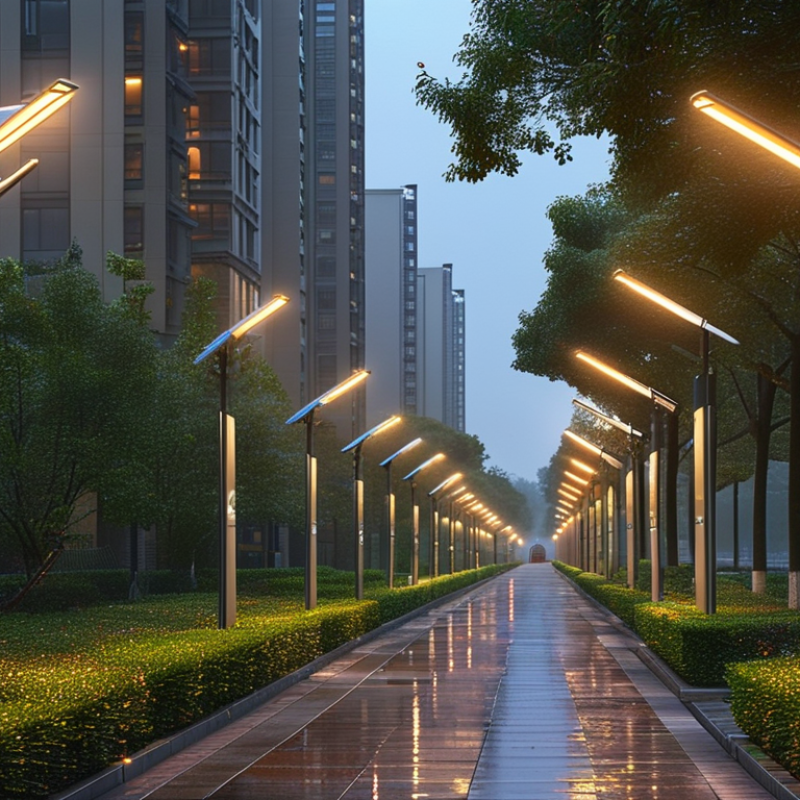
Smart solar street lights combine photovoltaic panels, batteries, LED fixtures, sensors, and a controller. During daylight, panels convert sunlight into electricity and charge the battery. After sunset, stored energy powers efficient LEDs along roads, pathways, and parking areas. A light sensor starts operation automatically. Motion or radar sensors can raise brightness when people or vehicles approach. That simple change reduces wasted energy. Quietly, it saves energy.
The “smart” part usually includes wireless communication, remote monitoring, and programmable lighting schedules. A city operator can check battery voltage, panel output, lamp status, and fault alerts from a dashboard. Some systems dim to 30 percent at midnight, then brighten when traffic appears. This requires reliable controls, not just a strong lamp. In my experience, installers should inspect shade, pole strength, drainage, and winter sunlight before ordering equipment. A bright specification sheet cannot fix a shaded panel.
When choosing in 2026, compare usable battery capacity, operating hours, charging performance, and protection ratings. Ask for test data across cloudy and cold conditions. Lithium batteries often offer useful cycle life, but temperature management still matters. Check whether replacement parts and software support remain available for years. Remote control is attractive, yet poor network coverage can make it unreliable. I would also request a nighttime trial on one pole. Real streets reveal glare, uneven lighting, and sensor delays. No design is perfect.
This illustrative operating profile shows how a smart solar street light can reduce overnight energy demand through scheduled dimming. The calculation uses a 40 W LED luminaire operating for 12 hours: 4 hours at 100% output, 4 hours at 50%, and 4 hours at 30%. Total LED energy consumption is 0.40 kWh per night, excluding controller and conversion losses.
Which Site Conditions Should You Assess Before Choosing One?
How to Choose Smart Solar Street Lights in 2026?
Before choosing a solar street light, inspect the site, not just the product sheet. Measure shading from trees, buildings, signs, and seasonal foliage. A roof edge can block winter sunlight for several hours. The World Bank’s Global Solar Atlas provides long-term solar radiation maps for preliminary assessment. Still, local shading can make those averages misleading. Visit the location during different seasons if possible.
Check the road’s lighting purpose and surrounding activity. Pedestrian paths, intersections, and rural roads need different lighting levels and controls. CIE 115:2010 links lighting requirements with traffic, pedestrian activity, and environmental conditions. Record pole spacing, road width, surface brightness, and nearby homes. Glare matters too. A brighter lamp is not always a safer lamp.
Weather data deserves careful review. NREL’s PVWatts model uses a default total system loss of about 14%, including wiring, soiling, and other losses. Treat that figure as a screening reference, not a promise. Dust, snow, salt air, and high temperatures may reduce output further. Battery performance also changes in cold conditions. I would request at least twelve months of local solar and temperature data. One sunny week proves very little. A neat calculation can still be wrong. Check drainage, vandalism exposure, maintenance access, and mobile connectivity before approving the design.
How Do You Compare Solar Panels, Batteries, LEDs, and Controllers?
How to Choose Smart Solar Street Lights in 2026?
How Do You Compare Solar Panels, Batteries, LEDs, and Controllers?
A reliable comparison starts with usable light, not panel wattage. IRENA reported 1,419 GW of global solar capacity at the end of 2023, but sunlight still varies sharply by season and location. Compare panel output at operating temperature, low-light performance, shading tolerance, and annual degradation. A higher wattage panel is not automatically better. Check the energy yield in winter, when street lighting demands are often highest.
The battery decides.
Compare usable watt-hours, not only rated capacity. A simple estimate is rated capacity multiplied by allowable depth of discharge and system efficiency. The IEA’s 2024 battery report highlights the rapid growth of storage needs, yet small systems still suffer from heat, poor charging, and weak battery management. Examine cycle-life conditions, thermal protection, charging limits, and replacement access. For LEDs, compare delivered lumens, optical distribution, efficacy, color temperature, and thermal design. Lumens per watt alone can mislead when glare wastes light. Controllers should be judged by conversion efficiency, standby consumption, dimming logic, protection functions, and data visibility. MPPT can improve harvesting during cold mornings or changing irradiance, but its real gain depends on the array and climate. This is where many specifications become vague. Numbers need context. A careful installer should request test conditions, photometric files, and seasonal simulation results before accepting impressive figures.
How to Choose Smart Solar Street Lights in 2026? - How Do You Compare Solar Panels, Batteries, LEDs, and Controllers?
A practical, brand-neutral comparison guide for selecting components and designing reliable solar street-lighting systems.
| Component | Comparison Dimension | Entry-Level Option | Balanced Option | High-Performance Option | Selection Guidance |
|---|---|---|---|---|---|
| Solar Panel | Typical rated power | 40–80 W | 80–160 W | 160–300 W | Choose enough capacity to restore the daily energy used by the lamp during the available solar window. |
| Cell technology | Standard monocrystalline or polycrystalline | Monocrystalline with improved low-light performance | High-efficiency monocrystalline | Monocrystalline panels generally provide higher output per square metre; the actual energy yield still depends on orientation, shading, temperature, and weather. | |
| Typical module efficiency | 17%–20% | 19%–22% | 21%–24% | Higher efficiency is useful where pole-top space is limited, but it should not replace correct system sizing. | |
| Temperature coefficient | About −0.40% to −0.45%/°C | About −0.35% to −0.40%/°C | About −0.28% to −0.35%/°C | A lower absolute temperature coefficient generally reduces power loss in hot climates. | |
| Useful service life | 20–25 years | 25–30 years | 25–30 years or longer | Confirm the expected annual degradation rate, mechanical load rating, sealing, and resistance to dust and moisture. | |
| Battery | Common chemistry | Lead-acid or gel | LiFePO4 | LiFePO4 with advanced battery management | LiFePO4 usually offers deeper usable capacity, lower weight, and more charge cycles than lead-acid options. |
| Typical usable depth of discharge | About 50%–60% | About 80%–90% | About 85%–95%, subject to the battery management system | Use the usable capacity, rather than the nameplate capacity, when calculating overnight runtime. | |
| Approximate cycle life | 500–1,200 cycles | 2,000–5,000 cycles | 3,000–6,000 cycles | Cycle life varies with temperature, charge rate, discharge depth, storage conditions, and maintenance. | |
| Operating temperature considerations | Performance declines in cold conditions; heat can shorten life | Generally better cycle durability, but high heat still requires protection | Integrated heating, insulation, or thermal monitoring may be useful in extreme climates | Check the permitted charging temperature range; many lithium batteries require charge protection near or below freezing. | |
| Recommended autonomy | 1–2 nights | 2–3 nights | 3–5 nights for critical locations | Base autonomy on local consecutive cloudy days, maintenance access, safety requirements, and seasonal solar resources. | |
| LED Lighting Module | Typical system power | 20–40 W | 40–80 W | 80–150 W | Select power from the required illuminance and road classification, not from wattage alone. |
| Typical LED efficacy | 100–130 lm/W | 130–170 lm/W | 160–210 lm/W | Higher efficacy can reduce panel and battery size, but optical efficiency and light distribution are equally important. | |
| Color temperature | 5,000–6,500 K | 3,000–5,000 K | 2,700–4,000 K | Warmer light can reduce glare and environmental impact; cooler light may improve perceived brightness but can appear harsher. | |
| Color rendering index | CRI 70+ | CRI 70–80 | CRI 80+ | CRI 70 or higher is common for outdoor roads; higher CRI may be preferred in pedestrian areas and public spaces. | |
| Ingress protection | At least IP65 | IP66 | IP66–IP67 | For exposed outdoor installations, verify both dust and water protection for the complete luminaire, not only the LED board. | |
| Smart Controller | Controller type | PWM charge controller | MPPT charge controller | MPPT controller with intelligent power management | MPPT can extract more energy from the panel, especially when panel voltage and battery voltage differ or conditions change. |
| Lighting control modes | Fixed dusk-to-dawn schedule | Multi-stage dimming schedule | Adaptive dimming based on time, battery state, motion, or traffic | Use dimming to reduce energy consumption during low-traffic hours while maintaining required safety levels. | |
| Monitoring functions | Basic fault indication | Battery voltage, charging status, and lamp status | Remote monitoring of energy, faults, temperature, GPS position, and performance trends | Remote data is most valuable when the system has many sites or difficult maintenance access. | |
| Protection features | Overcharge, short-circuit, and reverse-polarity protection | Over-discharge, over-temperature, and load protection | Comprehensive electronic protection with surge protection coordination | Protection settings must match the battery chemistry, panel voltage, LED driver, and local electrical requirements. | |
| Communication options | None or local infrared setup | Bluetooth or short-range configuration | Cellular, LoRaWAN, or other low-power network connection | Choose communication technology according to coverage, subscription cost, security, and maintenance needs. | |
| Complete System | Typical lighting schedule | Full output for 4–6 hours, then reduced output | Full output for 4–6 hours, followed by 30%–70% dimming | Adaptive profile with motion or traffic-based boost | Always verify that the dimming profile complies with local road and pedestrian lighting requirements. |
| Typical system efficiency target | Moderate | High | High with active monitoring and optimized control | Evaluate the complete energy chain: panel, controller, battery, driver, LED module, optics, and operating schedule. | |
| Recommended design margin | 10%–20% | 20%–30% | 25%–40% for harsh or critical locations | Include margin for dust, ageing, temperature, imperfect orientation, weather variability, and battery capacity loss. | |
| Best-fit application | Low-traffic paths and mild climates | Residential roads, parking areas, and standard urban streets | High-latitude, cloudy, remote, coastal, or safety-critical locations | Match the system level to actual risk and operating conditions rather than selecting the largest available specification. | |
| Key acceptance tests | Night-time operation and basic charging | Runtime, dimming, battery protection, and water resistance | Illuminance uniformity, autonomy, remote alarms, thermal performance, and long-duration reliability | Request measured test data, installation instructions, electrical diagrams, and maintenance procedures before deployment. |
Note: The ranges are practical planning values for preliminary comparison. Final component sizing should use local solar irradiation, latitude, temperature, shading, required illuminance, pole spacing, operating hours, and the applicable lighting and electrical standards.
What Smart Features and Safety Functions Should You Look For?
How to Choose Smart Solar Street Lights in 2026?
A smart solar street light should react to people, vehicles, and weather changes. Look for microwave radar or PIR sensing, adjustable dimming, and scheduled lighting profiles. These functions reduce wasted energy without leaving pedestrians in darkness. The International Energy Agency’s Energy Efficiency 2024 report states that lighting uses about 15% of global electricity. Efficient controls therefore matter, not just efficient panels.
Safety requires more than brightness. Choose fixtures with automatic fault alerts, battery temperature protection, surge protection, and emergency full-power operation. A failed sensor should not create a black street. The World Health Organization reported about 1.19 million annual road deaths in its Global Status Report on Road Safety 2023. Lighting cannot prevent every crash, but consistent visibility supports safer movement. Check compliance with IEC 60598 requirements, suitable IP and IK ratings, and documented photometric tests.
Cybersecurity is easy to overlook. Remote systems should use encrypted communication, user permissions, firmware updates, and activity logs. Ask how data is stored and deleted. In practical projects, poor sensor placement often causes false dimming near trees or parked vehicles. No sensor is perfect. Installers should test detection zones at night and during rain. Battery autonomy also deserves scrutiny; request measured results under low-sun conditions, not only laboratory claims. A cautious buyer may accept slightly higher equipment costs for reliable alarms, safer controls, and easier maintenance. That choice is not always the cheapest one.
How Can You Evaluate Installation, Maintenance, Cost, and Lifespan?
How to Choose Smart Solar Street Lights in 2026?
Installation should begin with the site, not the product brochure. Measure road width, pole spacing, tree cover, winter sunlight, and nighttime traffic. A compact luminaire may look efficient, yet poor orientation can create dark patches. The IEA PVPS Trends 2024 report recorded global solar capacity above 1.6 terawatts, but local performance still depends on weather and design. Smart controls should support dimming, motion sensing, fault alerts, and remote performance checks. These features reduce unnecessary runtime and simplify inspections.
Tips: Request a lighting simulation, battery warranty, and tested autonomy data. Ask for results under cloudy conditions, not only laboratory sunlight. Inspect whether one technician can replace the battery safely. The U.S. Department of Energy states that quality LED systems commonly target 50,000 hours or more. However, the battery usually limits system life. BloombergNEF reported an average lithium-ion battery price of 115 dollars per kilowatt-hour in 2024. That benchmark does not equal a complete street-light cost. Enclosures, controllers, labor, transport, and recycling still matter.
Compare total cost over ten years. Include cleaning, firmware support, battery replacement, vandal-resistant hardware, and spare parts. A five-year warranty sounds strong, but read its exclusions carefully. Ask for measured energy use, not rated power alone. In practice, maintenance assumptions are often too optimistic. Dust accumulates. Trees grow. One failed controller can disable several lights. Choose modular equipment with accessible parts and keep a small local stock. Check monthly energy and fault records during the first winter; that period may reveal design weaknesses early.
FAQS
Check sunlight, road width, pole spacing, drainage, maintenance access, and nearby homes. Trees, signs, and roof edges may create hidden shadows. Seasonal foliage matters. Visit the site in different seasons when possible.
Measure shadows from buildings, trees, signs, and roof edges throughout the day. A roof edge may block winter sunlight for several hours. Local shading can defeat regional solar averages. One clear afternoon proves very little.
Match lighting to pedestrian activity, traffic, road width, and surrounding conditions. Intersections may need different distribution from rural roads. Record surface brightness and nearby homes. More brightness is not always safer.
Review at least twelve months of local sunlight and temperature data. Consider dust, snow, salt air, heat, and cold conditions. These factors reduce energy collection or battery performance. A neat calculation can still be wrong.
Compare seasonal energy yield, operating-temperature output, low-light performance, and shading tolerance. Check expected annual degradation as well. Higher wattage does not automatically mean better performance. Winter output deserves special attention.
Compare usable watt-hours, not only rated capacity. Consider allowable discharge, system efficiency, cycle life, thermal protection, and charging limits. Check how easily technicians can replace the battery. The battery decides.
Compare delivered lumens, optical distribution, color temperature, and thermal design. Lumens per watt can mislead when glare wastes light. Review photometric files before approval. A bright spot is not useful coverage.
Check conversion efficiency, standby consumption, dimming logic, protection functions, and data visibility. Adaptive tracking may improve energy collection during changing sunlight. Its real benefit depends on climate and panel design. Request test conditions and seasonal simulations. Specifications can be vague.
Conclusion
Choosing a Smart Solar Street Light in 2026 requires more than comparing brightness or price. These systems combine solar panels, batteries, LED lamps, controllers, sensors, and communication functions to provide efficient lighting without relying entirely on the power grid. Before selecting a model, assess the site’s sunlight exposure, climate, soil conditions, installation height, traffic patterns, shading, and required lighting coverage. These factors determine the suitable panel capacity, battery storage, LED performance, and control strategy.
A complete evaluation should also consider smart features such as motion detection, automatic dimming, remote monitoring, fault alerts, scheduling, and adaptive lighting. Safety functions, weather resistance, reliable protection systems, and stable operation are equally important. Finally, compare installation requirements, maintenance access, replacement needs, total ownership cost, expected battery and LED lifespan, and long-term energy savings. The best choice is a balanced solution that delivers dependable illumination, efficient energy use, simple management, and consistent performance throughout changing seasons.

Blog Tags: